Seven apps, one game
Art in Photoshop, layout in InDesign, stats in a spreadsheet, rules in Google Docs, files in Drive. None of them talk to each other.
With the Studio: One project holds every component, every file and the rulebook.
Early access
Most board games stall between a prototype that plays well and a print run: art in one app, card stats in a spreadsheet, rules in a doc, and a factory that sends the files back. Game Tribe Studio puts every card, token, board, box and rulebook in one place, and gives you files your factory can print.
Free in early access · Works in your browser · Your files stay yours
The problem
We learned this making Nataterra. These are the jobs that eat months between a finished prototype and a print run, and what the Studio does about each one.
Art in Photoshop, layout in InDesign, stats in a spreadsheet, rules in Google Docs, files in Drive. None of them talk to each other.
With the Studio: One project holds every component, every file and the rulebook.
Rebalance a stat after playtesting and you re-export the whole deck by hand, then hope you didn’t miss one.
With the Studio: Link a spreadsheet and the deck rebuilds itself when a row changes.
Wrong bleed, RGB instead of CMYK, low-resolution art, a die line from the wrong template. Every round costs weeks.
With the Studio: Print checks on every card, real die lines and CMYK before anything leaves.
The rulebook says one thing, the cards say another, and backers find it before you do.
With the Studio: Rules written beside the components they describe, with names linked both ways.
Which picture is final? Which card is it for? Briefs, sketches and feedback scattered across inboxes.
With the Studio: Art briefs built from your components, with feedback pinned to the sketch.
Quotes arrive as PDFs and you still don’t know what one copy costs, or what to charge backers.
With the Studio: Quotes side by side, a landed cost per copy and pledge tiers that add up.
Everything in the box
Shown here: Afterfall, our next game, being made in the Studio.
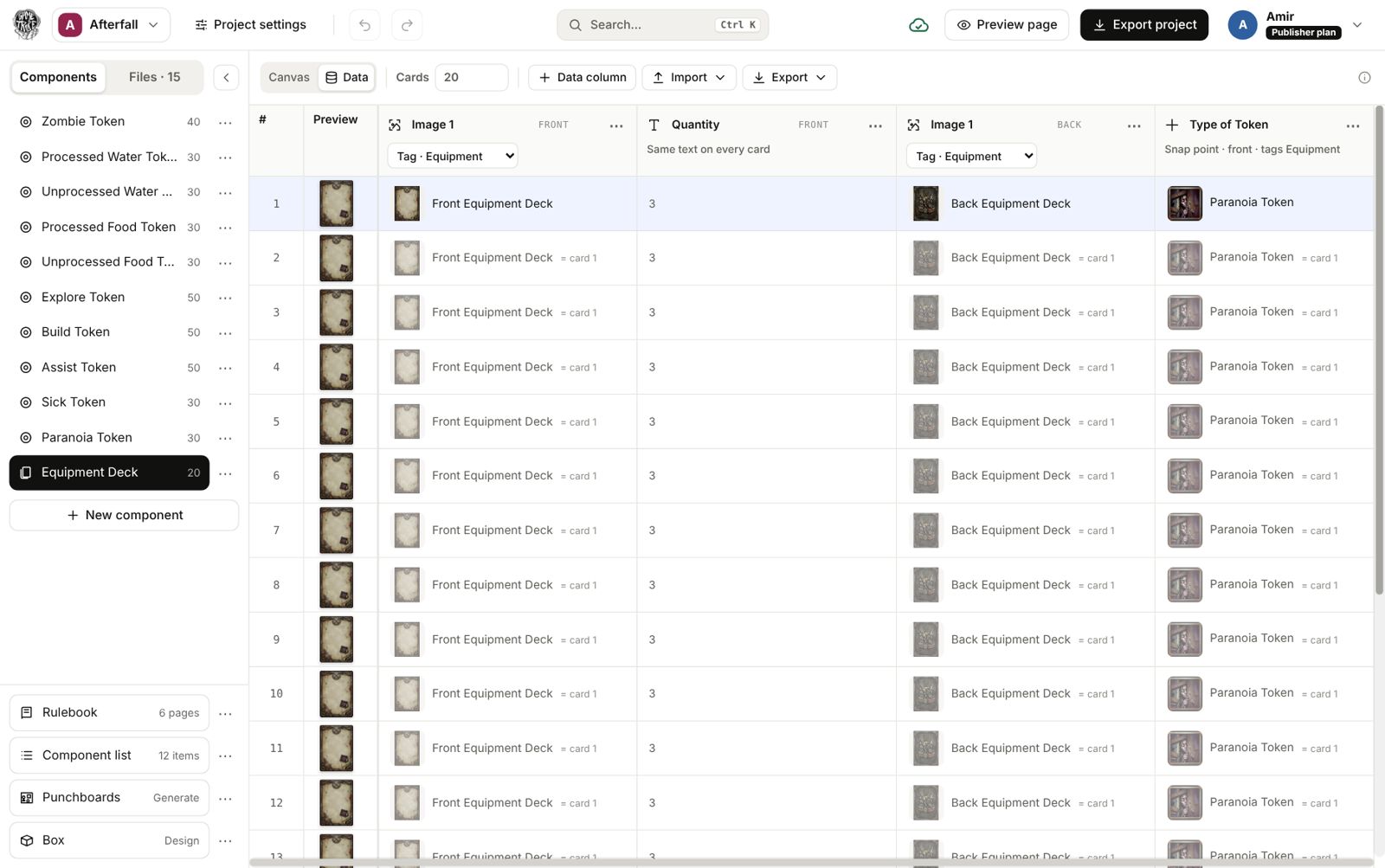
01
Link a spreadsheet and the whole deck builds itself. Change a row, every card follows.
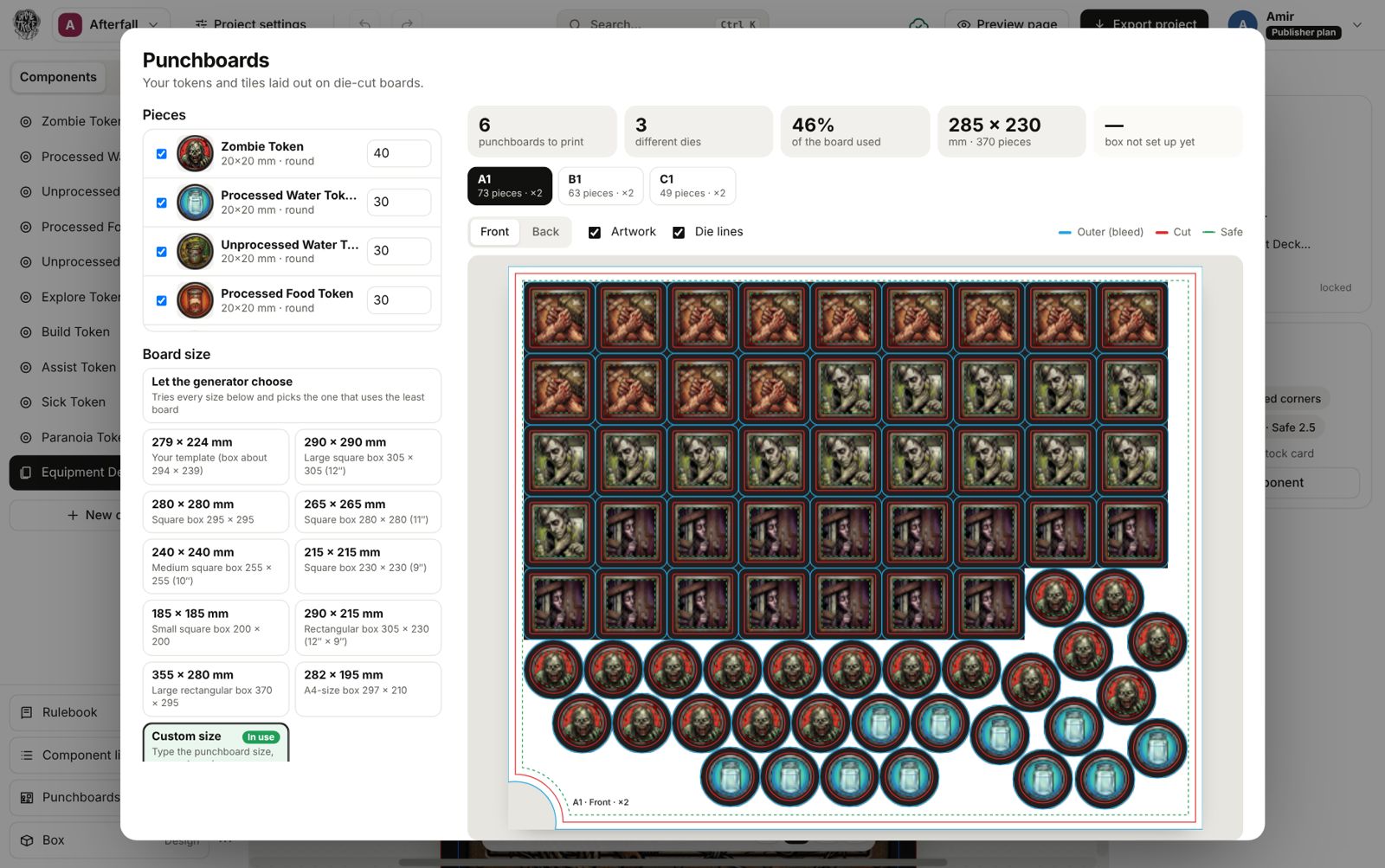
02
Tokens packed onto die-cut boards automatically, front and back lined up, on the size that wastes least.
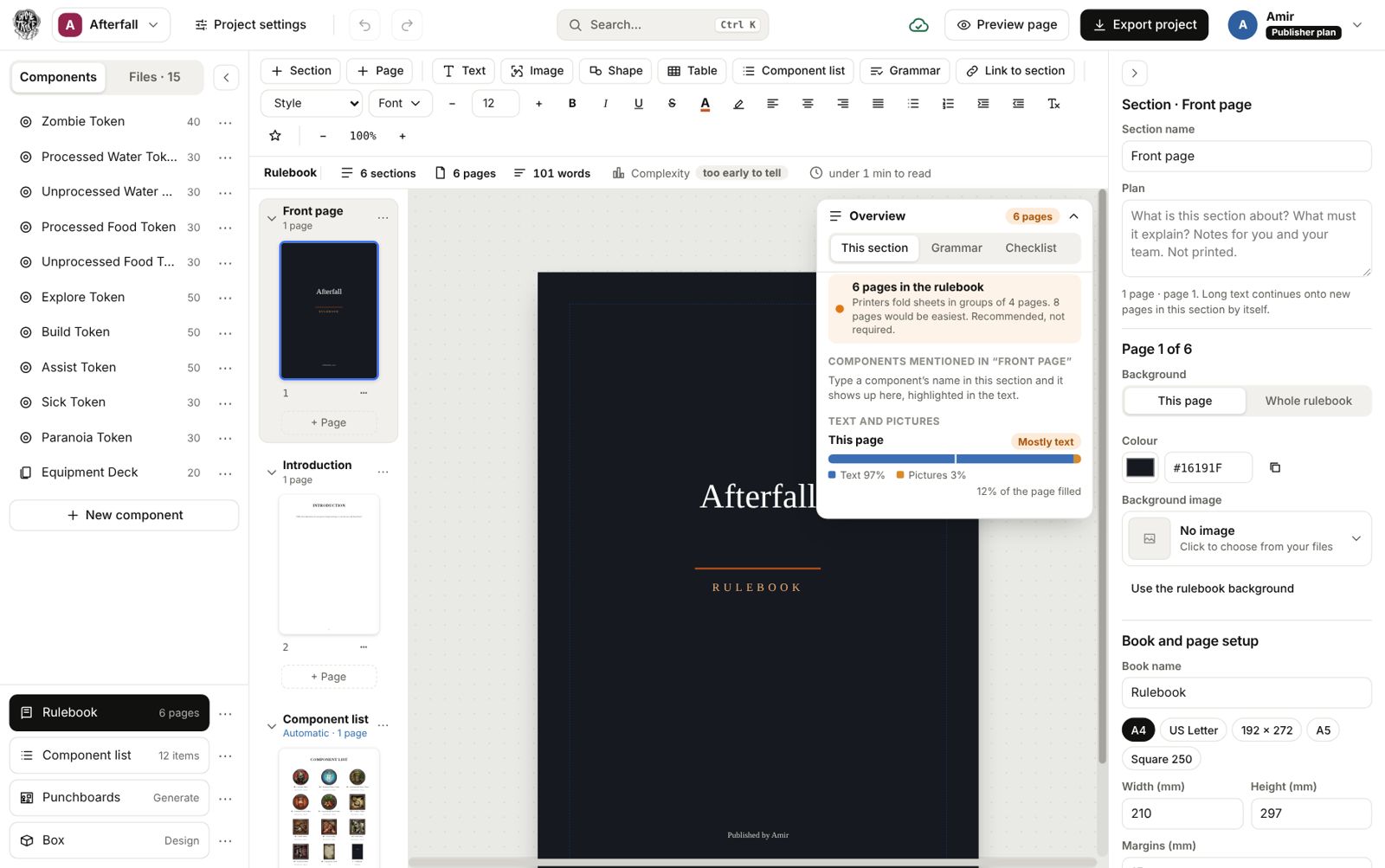
03
Write the rules next to the pieces they describe, with a grammar check and a page planner.
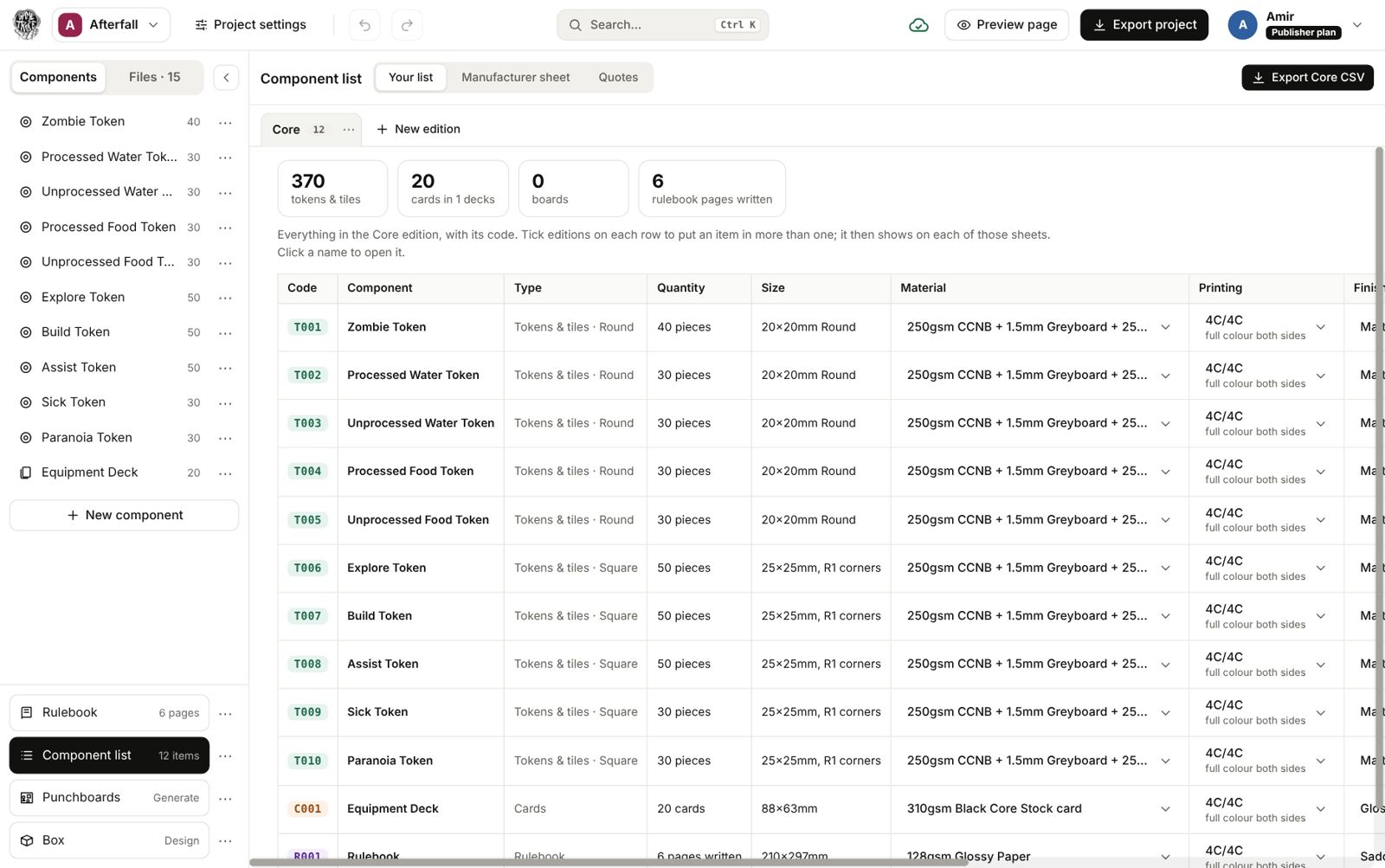
04
Every piece with its code, size, material and printing, ready for quotes.
How it works
Start from a component template, drop in your art and link your card data.
Pick materials and let the print check catch bleed, colour and resolution issues.
Download factory-ready files, or send them straight to a manufacturer for a quote.
Made by a studio that ships
Game Tribe designs and publishes its own games. Nataterra went from first prototype to a Kickstarter that raised three times its goal, a full print run, and players around the world. Every feature in the Studio comes from a step we had to do by hand.
Need a hand?
File and proof checks, factory quotes, costs and pricing, and help getting the most from the Studio. Consultations open soon.
We’re inviting designers in small groups so we can listen properly. Leave your email and we’ll send your invite as places open.
No. Pick what you’re making and the Studio sets it up for you. Click Tokens, choose Circle, drop in your art, and it’s done: bleed, cut line and safe zone already drawn. Tokens and tiles come as circles, squares, hexes and triangles, or any shape traced from a PNG. Decks come at poker, bridge, tarot, mini or square size, with five ready card styles. Boards, dice, rulebooks and the box are just as quick. Or start from a ready-made set: a sample game, a deck builder, a worker placement game or a card battler.
Yes. Upload your insert as an STL file and the Studio fills its wells with your cards, tokens and dice, the way factories pack trays, then sizes the box around it. Only the tray’s own height counts, and you can turn the whole box around in 3D.
Yes. Everything you create and upload stays yours. You can download a complete backup of any game at any time.
Any. The Studio makes files at standard factory sizes for cards, tokens, boards, boxes and rulebooks, and you can lay a factory’s own template over your design to check it before you send anything.
Yes. Invite collaborators and illustrators, choose what each person can see, and leave comments pinned right on the cards. Illustrators you invite are always free.
Game Tribe Studio is in early access with a small group of designers. Join the waiting list and we’ll invite you as places open. Early access is free.

Free for new members
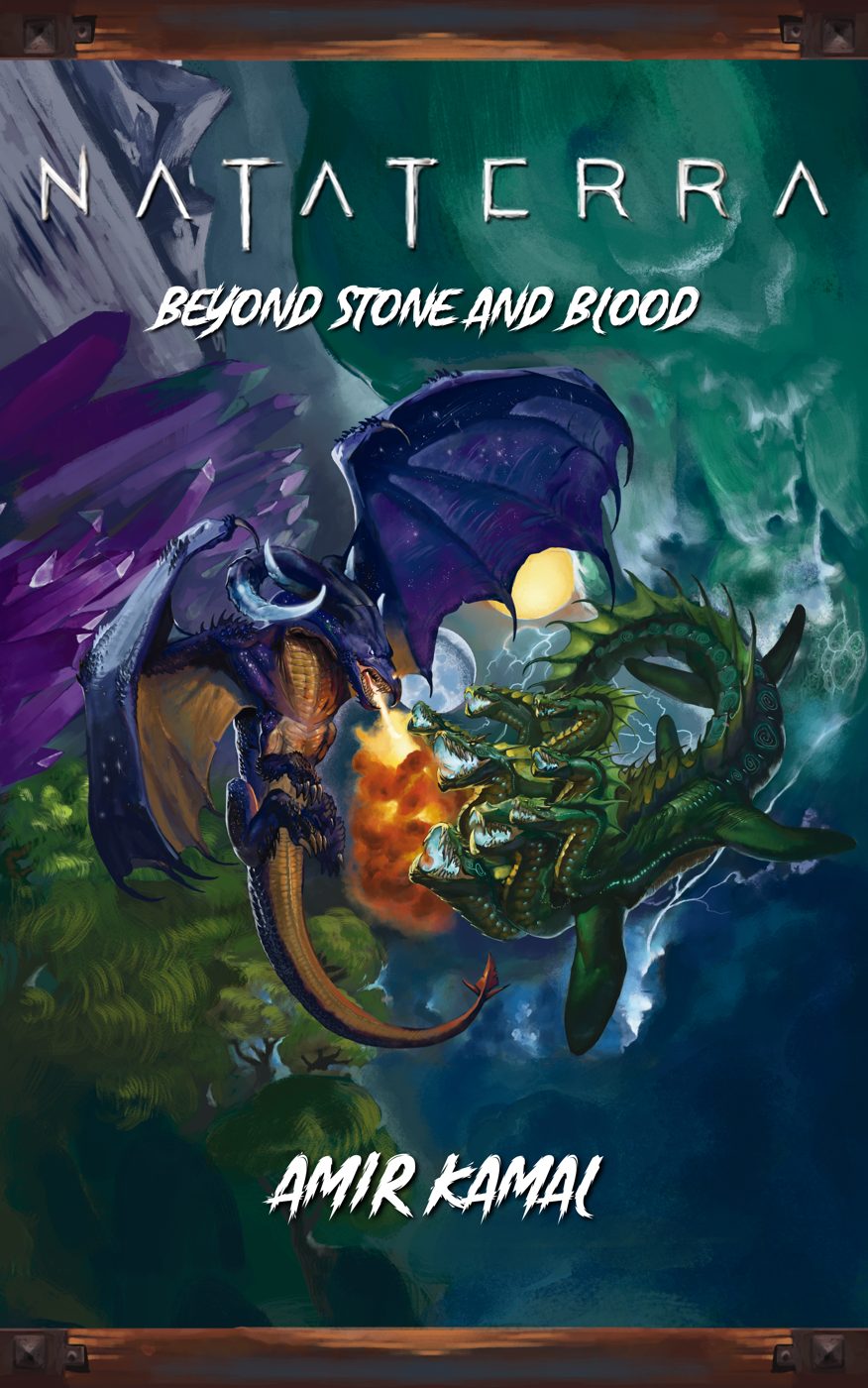
The prologue and first chapter, free.
Sent to your inbox the moment you join.
We’ve sent a link to . Tap it to confirm, and your free prologue and first chapter of Beyond Stone and Blood are on their way.